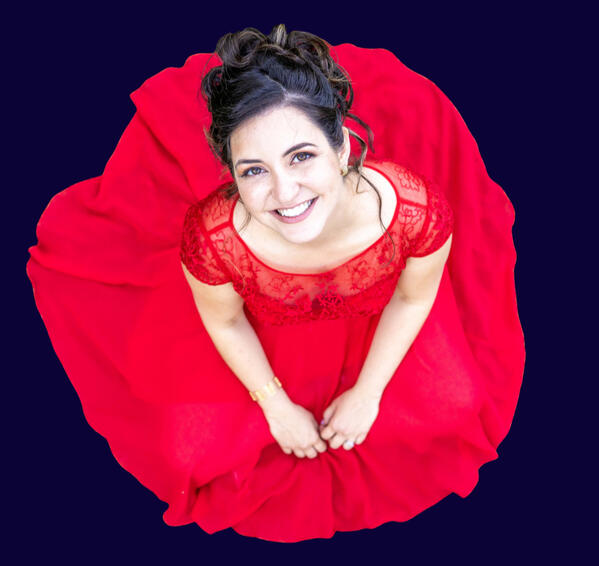
N.R.Farias
Conversations, books, and the threads that bind us in the bookish community!
About me & the blog
I created this space because some conversations need more room than we usually have on Instagram or Threads.This blog is where I want to slow things down and give authors and bookish creators the space their work deserves — through interviews, longer features, and extra material that doesn’t quite fit into a caption or a carousel. Stories, after all, rarely do.It’s also a place for my own reading life. I’ve been lucky to have several indie books find their way into my hands, and I wanted a more fitting way to talk about them — one that goes beyond star ratings on Goodreads or Amazon. Here, I can sit with a book a little longer, reflect on what stayed with me, and talk about why it mattered.This blog is about attention, care, and making space for stories, for creators, and for the conversations that grow around them.
Exclusive Interviews
Meet your new favorite authors!
As an author, I’m opening up the conversations that usually happen behind the curtain!!!I’ve been incredibly lucky to meet so many amazing indie authors with stories that deserve to be heard, and this space is where I get to share those conversations (with their approval) with more people, and celebrate the work they’re doing.
Book Reviews
As an author myself, I know how much work it takes to write a book. Because of that, I don’t believe in reducing a colleague’s work to a number of stars. Every book exists for someone, and often for different people at different moments in their lives. We’re complex readers, and our tastes shift with time, mood, and circumstance.So instead of ratings, my reviews focus on vibe. I try to match each book to what you might be looking for right now: the feelings it stirred in me, the atmosphere it carries, and what stood out as truly remarkable while reading it. The goal is simple: to help the right book find the right reader.You should also know a few things before diving in.I don’t care if a book is “perfect,” highly polished, or backed by a big budget. Not every indie author has access to editors, designers, or marketing and I know how much heart goes into creating a story regardless. This space exists to support indie authors at every stage, doing the best they can with what they have.One boundary is firm, though: I don’t review AI-written books. I do my best to filter them out before featuring anything here. This blog is about celebrating human creativity, human effort, and human stories, not machines.Below, you’ll find all my book reviews gathered in one place.
Interview with K. Septya (Kiky)
I met Kiky on Instagram, through the wonderful chaos that is the indie author community and we hit it off instantly! We bonded over writing about trauma, about turning our most difficult life experiences into stories that hold meaning, and from day one, Kiky has been nothing but a sweetheart to me.Without further ado, here's the full interview. Have fun reading!
- Hi and welcome to my Google Doc! (haha) Let’s start! Would you like to introduce yourself?Hi, I’m Kiky. I’m originally from Indonesia and now living in France with my husband and our two kids. I’m 37, pretty introverted, and happiest with a good book, a cozy movie night, or a gaming session.
"I especially love movies from the 2000s and enjoy quiet, simple moments at home."
- What made you decide to write in English?English has been my second language since I was young. I grew up loving English movies and eventually started reading in English too, so it came naturally to me. Even my journals were always written in English. I don’t really know why, but my brain just seems to work faster when I write in English than in my mother tongue. lol.
- When/how/why did you start writing?I’ve been writing in journals since I was young, back when it was all about diaries and gushing over boys. Then, two years ago, I started my Bookstagram, and I fell in love with it. That’s also where Indie Talks began, a project where I interviewed authors and truly enjoyed every part of it.
The idea of becoming an author first came up when my husband asked why I couldn’t be like them. An author. At the time, I dismissed the thought again and again. But as time passed, more and more author friends encouraged me to write. It took a lot of thinking before I finally let myself take that step.
In March 2025, I made the decision to start writing. The first step was hard. I remember writing the epilogue while crying my eyes out, then needing days before I could move on to chapter one. Slowly, the story began to form, blending real events with fiction. That’s when my characters came to life, along with the places and people around them, and I found myself falling in love with every single word.- What would you say was the hardest part of the process? Was it writing? Was it the content of the scenes? The plotting? The editing?All of them, honestly. Writing the monologues flowed so much faster, but the dialogues gave me constant headaches. I don’t even know how many times I made faces at my screen from how cringe it sounded. Lol. And the endless “he says,” “he murmurs”…
My first draft was a disaster when it came to tenses, and I had to fix all of it. It was brutal. The plotting was messy too. I had missing days, missing characters, and missing dialogues.
That’s why I’m so incredibly grateful to have Leigh Jack in my life through all of this. This book would not be what it is without her. She is everything to me in this process, my editor, my plot thinker, and my tense catcher. Lol.-Tell us briefly what Whispers in the Storm is about.The Whispers in the Storm is a story about the journey of a survivor of child sexual assault. It is a very heavy story, and when I decided to write it, I promised myself I would let everything out. The trauma, the pain, the insecurities, the panic attacks, the anger, and all the darkness.
I chose this topic because it is something we rarely talk about openly. It takes immense courage for someone who has been through this to finally speak out. The fear of being judged or pitied clouded my mind for a long time, but I wrote it anyway. I wrote the raw truth and the ugliness of it all, to show that this did happen to many of us, unfortunately.
But I also wanted to show that even after such a dark past, there is a light at the end of the tunnel. The healing journey is brutal, and the support of loved ones is what makes it possible to survive it. I gave this story a happy ending, not for the sake of romance, but because it is real. It happens. I got my happy ending, and if I can have it, then others can too.
I once saw and lived with a monster. Now I live surrounded by the best people. I poured all of that into this book, the bad and the good, the memories and the people. I feel like I gave a piece of my soul to this story, and even though it was hard, I would do it again in a heartbeat.- Oh, Kiky, thank you so much for touching such a hard topic and putting your story out there, so others can be inspired and know that there is an out.
I feel like many of us are writing about the traumas we lived through. Traumas became more than a sad backstory, it became the spine of many stories. How did you deal with writing about it without triggering everything back? Did you have a routine, something to ground you in reality, instead of being pulled into the darkness?When I wrote this story, it was triggering, and I think that was unavoidable. Once I poured it into words, I relived everything all over again. When it became too dark, I usually took a break from writing and watched movies. I watched a lot of Lord of the Rings and The Hobbit, and they really helped shift my mood.
Because the flashbacks come from things that happened when I was a child, I always kept one thing in mind. This story is for her. That thought made it easier for me to keep going and continue writing.
I truly believe that writing this story is a huge step toward closure for me. It helped me close those chapters and move forward into the part where I get to live my life.- The topic itself is hard and confrontative. What can a reader expect to feel when they pick up your book?That you are not alone, especially those who have been through something similar to me. I wanted the story to resonate. I wanted it to do something good, to help someone in any way it could. That would truly be a dream.- What are the tips you would give to someone just starting out their author journey?*I’ve been very new to this, but the best tip I can give based on my own experience is simply to do it. I’ve learned so much since I started writing, from understanding the whole process to finding joy in writing and even having fun while editing. It wasn’t easy, especially as an indie author.
But despite all of that, you get the joy of creating something precious, something you’ll always be proud of. So just do it, and find someone who genuinely supports you along the way. Having author friends has been incredibly valuable to my journey.
And my last tip: write the story for you. It comes from you, so own it.I love this! Just do it, write for you!
What are your plans after Whispers in the Storm? Will there be a sequel? Will you continue writing?I have some exciting projects coming up. I’m planning a sequel to Whispers in the Storm, which will also be a standalone story, but I also have another idea that’s been nagging me to be written. It’s a completely different genre, and I’ve already written the very first chapter. I love it so much.
I might move forward with this one first before the sequel, but I don’t have a set timeline. I want to take this project without pressure or deadlines and just see where the journey takes me.
I hope you enjoyed this post. If you made it this far, leave a comment and let me know what your favorite part was.And follow Kiky on her socials:
1 Whispers in the Storm is available from February 10th as eBook and Paperback on Amazon and also on Kindle Unlimited.
Interview with Bunny
I first came across Bunny while scrolling Threads, the way so many meaningful things seem to find us. What drew me in wasn’t even her book at first, but how openly she weaves heartbreak and her queer experience through everything she writes.
Bunny is a Black queer woman from a Caribbean country, where being openly queer is still met with hostility.In our conversations, she shared that this is why she chose to write under a pen name. Raised Catholic and still connected to her religious roots, she navigates many complicated questions of self-identity.
"Ironically, my first queer experience was with someone from my very, very Catholic high school."
- Bunny
When asked how her writing journey began, she said that writing is therapy for her — something so deeply ingrained she can’t trace its beginning.
"I remember growing up, hiding under the covers at bedtime, reading Mills and Boon published romance novels I had no business reading at that age!"
- Bunny
Bunny began with poetry, inspired by Shakespeare, using it as a way to process pain and the many complexities of life.
"I had a poetry version of a burn book. Childish crushes that inevitably became heartbreak?
Well, im writing about it. Stabbed in the back by my bestie?
Oh, my poem book is getting all the deets!"
- Bunny
Much of her writing style borrows from older plays and poetry — recounting events from different perspectives, using repetition to emphasize what matters, and playing with double entendres and layered meanings.
"I just love to write. And writing has quite literally saved my life on more than one occasion when life got too heavy."
- Bunny
She writes anonymously, yet always finds ways to leave pieces of herself in her work. Her debut novel, Sapphire’s Hunger1, is a powerful example of how she translates real-life experience into fantasy, rich with layered meaning.
When I asked her what advice she would offer to those at the beginning of their journey, this was her answer:
*"The best bit of advice I can give is staying true to yourself and remembering why you started.
Staying true to your voice and inner self as an author especially as an indie. Its so tempting to want to mimic something else or someone else in an attempt to "make it" or "break through.
"The second best bit of advice I can offer is: create a timeline sheet!
Wheeewwww! I remember editing Sapphire’s Hunger and realizing that an event had started in the daytime an night had fallen, only for me to resume the next chapter and its still daytime!!! A beautifully described daytime scene that was woefully misplaced!😅😅😅"We always think we will remember the little details, but trust me, save yourself and write it down!
Keep track of your timeline."Second one is: sketch a map!
It helps to write scenes where people sre travelling and moving about. Realistically it can't take 5 days to travel to the city close by, but 2 days to travel to the end of the continent. 😅😅😅"
Here is an exclusive from Bunny about her debut fantasy romance:
"Sapphire’s Hunger is a part of a series.
Book 1 is a sapphic love story that highlights how powerful love can be. And it doesn't only describe intimacy between partners, but also the complexities of the parent-child dynamic as well. There are strong themes of sacrifice as well and at the core of it all, isn't that the greatest act of love?"I didn't realize how strongly i related to the main character until several edits later."Perhaps the most impactful part of this story as well is that for the most part, its very queernormative."Nobody wants them to be together, but it's not because they're wlw, but rather due to their roots and their backgrounds."
I hope you enjoyed this post. If you made it this far, leave a comment and let me know what your favorite part was.And follow Bunny on her socials:
1 Sapphire's Hunger is available as eBook and Paperback on Amazon and also on Kindle Unlimited.
Sapphire's Hunger
by Bunny
I wrote an article about the author, Bunny:
1 Sapphire's Hunger is available as eBook and Paperback on Amazon and also on Kindle Unlimited.
Sapphire’s Hunger is a fantasy romance (romantasy) that tells the story of Sapphire Fyord, a royal vampire, and Lisandrea, a witch. The two women are drawn to each other with a pull that feels almost inevitable from the moment they meet. Their connection carries the weight of fate, but also the ache of resistance, because everything around them, and at times within them, seems determined to keep them apart.
Bunny’s worldbuilding is lush and deliberate. The Fyord bloodline comes with a deep, carefully constructed heritage and history that matters to the story in meaningful ways. This isn’t background lore for decoration; it actively shapes the characters, their choices, and the stakes they face. Trust me when I say the lineage is important and rewarding to pay attention to.
Although Sapphire and Lisandrea feel meant for each other, their love is anything but easy. The repeated pull-and-push between them feels lived-in and emotionally earned.
One of the quiet strengths of the book is its queernormative universe. Sapphire and Lisandrea’s relationship is never questioned simply because they are two women. Their love isn't treated as natural and unquestioned; instead, the emotional tension comes from their magical nature and the dangers they carry, as secrets, magic, and prophecy loom around them.
The story unfolds through multiple points of view, and Bunny isn’t afraid to revisit key moments from different perspectives. Scenes sometimes repeat with new emotional context, allowing meaning to deepen. Personally, I enjoyed this approach. It makes certain moments land harder, especially when motivations and misunderstandings are revealed layer by layer.
Tonally, the book balances poetic description with emotional immediacy. Bunny has a way of writing scenes that linger, wrapping atmosphere and feeling together in language that feels intentional.
And while this is a romantasy, it’s important to be clear: this book is unapologetically spicy. There are multiple open-door scenes, including various BDSM elements, handled with care, consent, and respect. These moments don’t exist simply to advance the plot, instead, they reinforce the connection between Sapphire and Lisandrea, showing how desire, trust, and power can coexist when both partners want the same thing. The kink is integrated thoughtfully, not sensationalized.
Alongside the romance, the book weaves in themes of family, love versus legacy, and prophecy — forces that quietly shape the characters’ paths and the choices they’re willing, or unwilling, to make.
Pacing-wise, Sapphire’s Hunger sits between a slow burn and a fast-paced romance. The story follows the characters at their own rhythm. Readers who value emotional intensity over narrative precision will likely connect most with it.
This is a book to pick up when you’re in the mood for intense, dedicated love between two women: a love that is passionate, painful, tender, and very complicated. Expect twists, revelations, and moments that reframe what you thought you knew about the characters.
It’s also worth saying clearly: this is beautiful queer representation, written by a queer author who understands the emotional textures she’s working with.
Spoiler note for romance readers:
While this is a fantasy romance, it does not offer a happy ending in book one. I know! That can sting! It certainly did for me. But it also kept me turning pages until the very end, invested, aching, and wanting more.
This book is for you if…
you love queer romantasy
you enjoy stories where love feels fated, painful, and persistent
you appreciate worldbuilding with meaningful lineage and history
you don’t mind emotional hurt along the way (and maybe even crave it)
you’re into open-door romance, including kink and BDSM, written with care, consent, and intention
you like multiple POVs and seeing key moments reframed through different perspectives
you enjoy poetic language and emotionally driven storytelling
you’re okay with a romance that doesn’t promise a happy ending in book one
If you’re looking for a romantasy that embraces passion, pain, queerness, and emotional depth, Sapphire’s Hunger might be exactly the book you’ve been waiting for.
This book might not be for you if…
you’re looking for a story that closely follows traditional writing conventions
you prefer books that prioritize technical polish and consistency
you tend to focus more on form and precision than on emotional intent
you usually skip debut indie novels in favor of more established or highly edited works
Sapphire’s Hunger is best approached with a focus on its themes, atmosphere, and emotional journey rather than on technical perfection.